How to plan sauce stock for busy seasons, weddings and events
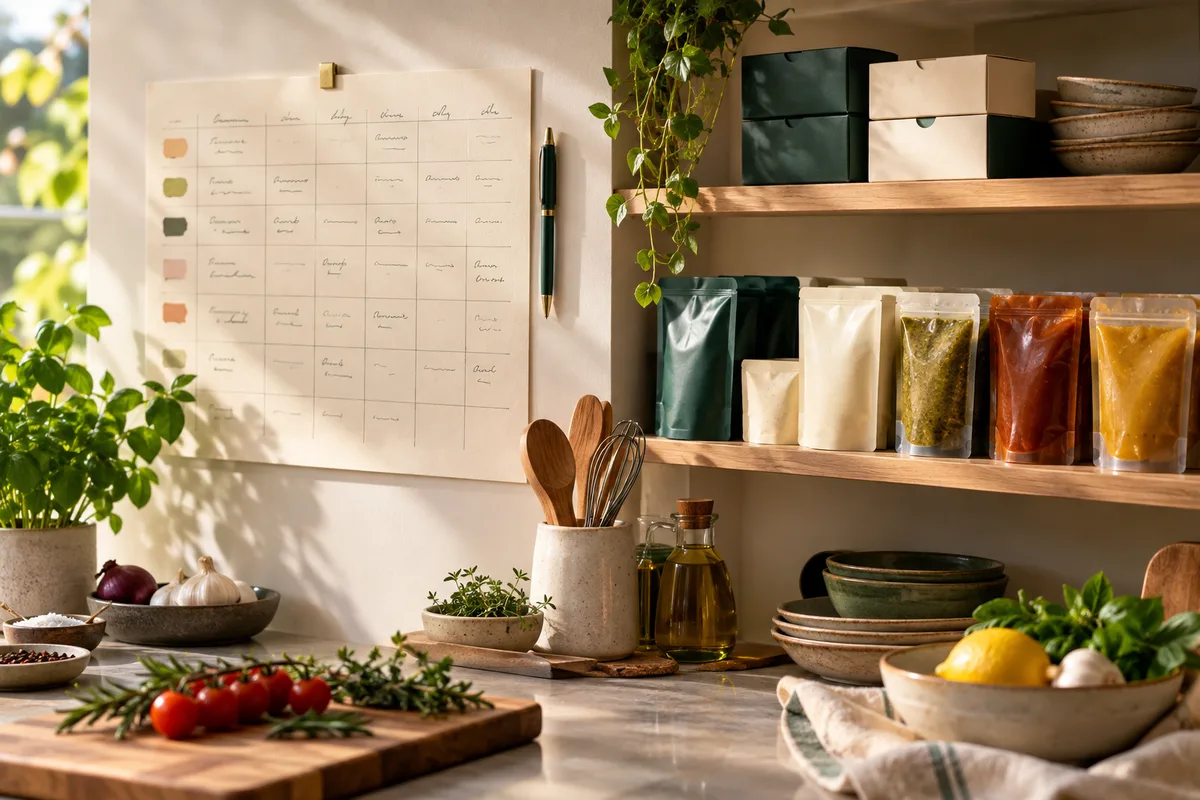
Running out of sauce in the middle of a rush is one of the easiest problems to prevent. Search data shows that interest in sauces like mayonnaise and ketchup rises in Pakistan every February and March, and many restaurants see busy spells around holidays, weddings and local events. This guide shows a simple method to plan sauce stock before a busy period, so you have enough without tying up too much cash.
Why planning matters
If you run out, you lose sales and guests. If you over-order, you tie up cash and risk waste. A plan lets you order the right amount at the right time. It also gives your supplier time to prepare, which helps you get on-time delivery.
Step 1: Start with your own data
Look at your sales for the same period last year. If you did not trade then, use a recent normal week. Write down:
- Portions of each dish sold per day.
- Delivery orders per day.
- Sauce used per week, from your stock counts.
If you have no data yet, track it for two weeks. Even a short record is useful.
Step 2: Estimate growth
Busy periods change demand. Decide how much more you expect to sell, as a percentage. Use information you have: a local event, a holiday, a new menu item, a marketing push or a new delivery app listing. Be honest. A guess of 30 percent growth is better than no guess.
Step 3: Calculate sauce needs
Use this formula for each sauce.
Sauce needed (kg) = portions per day × grams per portion × days ÷ 1,000 × (1 + growth) × (1 + buffer)
Here is an example with made-up numbers. A shop sells 100 burgers a day with 20 g of mayonnaise each, open 26 days, expecting 30 percent growth and a 15 percent buffer.
- Base: 100 × 20 × 26 ÷ 1,000 = 52 kg.
- With growth: 52 × 1.30 = 67.6 kg.
- With buffer: 67.6 × 1.15 = 77.7 kg.
- In 4 kg pouches: 77.7 ÷ 4 = 19.4, so 20 pouches, which is 5 cartons.
The restaurant supply page has a calculator for this.
Step 4: Plan sachets for delivery
For delivery, the sums are about orders.
Sachets needed = orders per month × sachets per order × (1 + growth) × (1 + buffer)
Example: 1,500 orders a month at 1.5 sachets each is 2,250. With 30 percent growth that is 2,925, and with a 15 percent buffer about 3,364. Divide by 1,000 and you need 3.4 cartons, so order 4. Read more in our guide to sauces for delivery and takeaway.
Step 5: Add lead time
Ask your supplier how long delivery takes to your city. Order that many days before you would run low, plus a few extra for delays. Do not rely on the last pouch.
A simple reorder point:
Reorder point = daily use × delivery days + safety stock
If you use 3 kg a day, delivery takes 4 days, and you want 2 days of safety stock (6 kg), your reorder point is 18 kg. When your stock reaches 18 kg, place the order.
A stock plan table
Copy this layout into a spreadsheet.
| Sauce | Daily use | Delivery days | Safety stock | Reorder at | Order size |
|---|---|---|---|---|---|
| Mayonnaise | |||||
| Ketchup | |||||
| Chilli garlic | |||||
| Ketchup sachets |
Update it every month, and every time a supplier changes the lead time.
Weddings and large events
Caterers plan by guest count.
- Count the guests.
- Decide the portions of each sauce per guest.
- Multiply by the grams per portion.
- Add a buffer of 15 to 20 percent for extras and spills.
- Confirm the quantity with the client and with your supplier.
Example: 300 guests, one 30 g portion of garlic mayo each, is 9 kg. With 20 percent buffer, 10.8 kg, so three 4 kg pouches of mayonnaise as a base.
Talk to your supplier early
Tell your supplier about your plans. A message a week or two ahead helps them prepare, and it helps you secure stock. Ask for a delivery date in writing. Our supplier checklist explains how to work with suppliers.
Storage space
More stock needs more space. Check you have a clean, dry shelf for the extra cartons, off the floor and away from heat. Our storage guide has a checklist. Use the oldest stock first.
After the busy period
When the rush ends, review the numbers. Compare what you planned with what you sold. Count your leftover stock. Write down what you learned and update your plan for next year.
Ask for a quote
Send your expected quantities, delivery city and dates to the Orino sales team. You can send an enquiry, read the restaurant supply page or call +92 334 0624284.
Frequently asked questions
When do sauce sales go up in Pakistan?
Google search data for terms like mayonnaise price and ketchup price rises every February and March. Your own sales history is the best guide for your shop.
How much extra stock should I order before a busy period?
Start from last year's sales, add the growth you expect, then add a buffer of 15 to 20 percent. Adjust after you see the first week.
How early should I order?
Ask your supplier for its delivery time, then order a week or more before you would otherwise run low. Do not wait until your last pouch.
How do I plan for a wedding or event order?
Count the guests, estimate the portions per guest, multiply by grams per portion and add a buffer. Confirm the quantity with the client.
How many sachets should I stock for a delivery rush?
Multiply expected orders by sachets per order, add 10 to 20 percent, and divide by 1,000 to get cartons.