Sauces for food delivery and takeaway: sachets, portions and packing
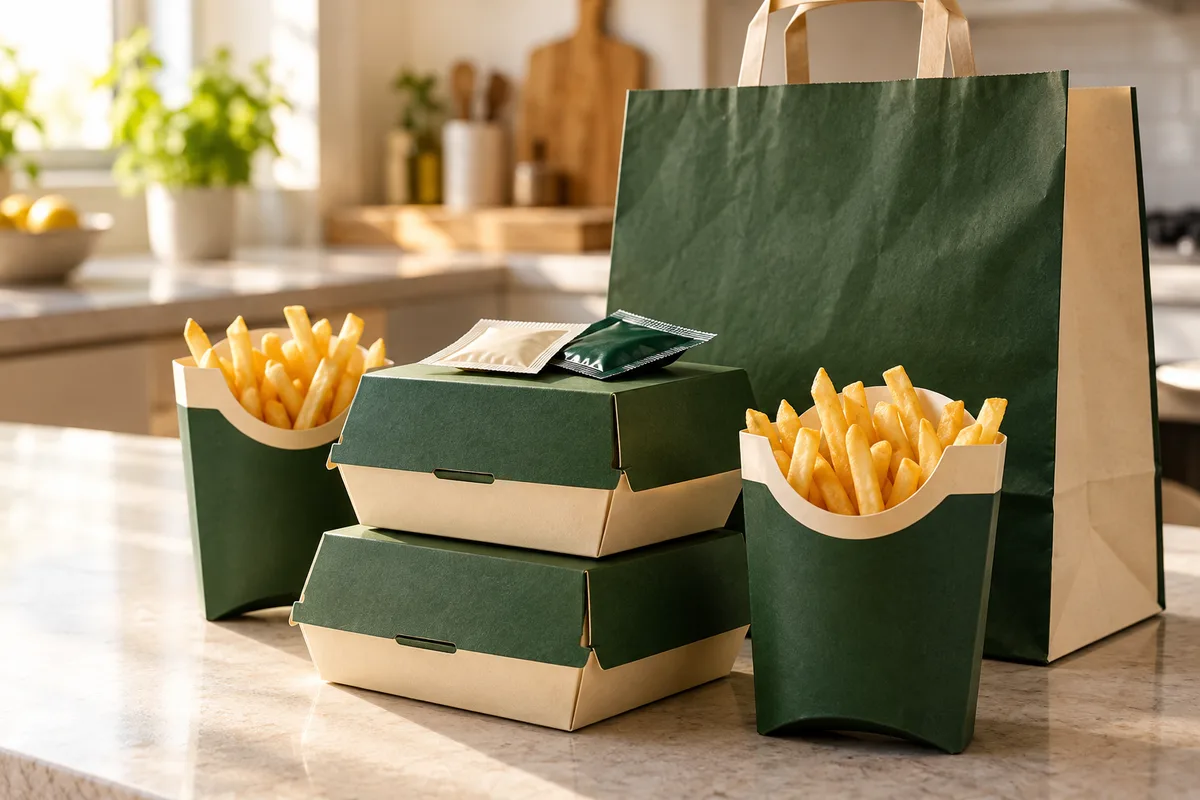
Delivery and takeaway change how a kitchen uses sauces. At a table, a guest squeezes ketchup from a bottle. In a delivery bag, every sauce needs its own sealed pack, and every order needs a count. The "ketchup sachets" search gets about 320 searches a month in Pakistan, and delivery kitchens are the people who buy them by the carton. This guide covers how to choose, count, pack and cost sauces for delivery and takeaway.
Sachet, cup or bottle?
Each option has a use.
Sachets are sealed, light and tidy. A guest tears one open when they are ready. They suit ketchup, chilli sauce and other thin sauces.
Cups with lids hold more. They suit thick dips such as garlic mayo or burger sauce. They cost more per portion once you add the lid, and they can leak if packed badly.
Bottles suit dine-in only. They are not practical for delivery.
Many kitchens combine them: sachets for ketchup and chilli garlic sauce, and a lidded cup for a premium dip.
Orino sachets
Orino makes two 9 g sachets: tomato ketchup and chilli garlic sauce. A packet holds 100 sachets, and a carton holds 10 packets, so one carton gives you 1,000 sachets. A sachet is 9 g plus or minus 1 g. You can see them on the products page.
How many sachets per order?
The right number depends on your menu, so start with a simple rule and test it.
- List your dishes and decide how many sachets each normally needs. For example, one for a burger and two for fries.
- Count your delivery and takeaway orders for a month.
- Multiply orders by sachets per order, then add a buffer of 10 percent for extra requests.
- Divide by 1,000 to see the number of cartons.
Example: 2,000 orders a month at 1.5 sachets per order is 3,000 sachets. Add 10 percent and you need 3,300 sachets, or just over three cartons.
Set a sauce rule and train staff
Without a rule, packers grab a handful. Write a short rule on a card by the packing station.
- Burger: 1 ketchup sachet.
- Fries: 2 ketchup sachets.
- Spicy items: 1 chilli garlic sachet.
- Extra sauce on request: staff ask, and charge if your menu says so.
Check the rule once a week against your sachet count.
Packing so sauces arrive intact
Bad packing leads to complaints and refunds. Use these habits.
- Put sachets in a small paper bag or tuck them in the lid of a container.
- Keep sachets away from hot items, because heat softens the seal.
- Do not put heavy items on top of sachets.
- Seal the bag, then staple the receipt on the outside.
- Check one sachet in each batch for leaks, and throw away damaged ones.
Hygiene and tamper evidence
Customers trust food that arrives sealed. A sealed sachet is a clean, single portion, and it is obvious if someone opened it. Hand cups are harder to trust unless you seal the lid with a sticker. Keep packing staff in gloves and wash hands often. Keep sachet cartons closed and off the floor so the packs stay clean.
What a sachet costs per order
Add the cost of the sachets to the packaging cost for each dish. Here is an example with made-up numbers, not Orino prices. If a carton of 1,000 sachets costs Rs 5,500, each sachet costs Rs 5.50. A burger order with 1 sachet adds Rs 5.50, and a fries order with 2 sachets adds Rs 11.00. Compare that with a cup and lid, which may cost more. Check the real quote for your own numbers. For a deeper look at pack choice, read our guide on ketchup in pouches and sachets.
Cloud kitchens
A cloud kitchen has no dining room, so almost every sauce leaves in a bag. Sachets are the main format, and portion rules matter more than ever, because each extra sachet is a direct cost. A cloud kitchen can still use a pouch inside the kitchen for sauces that go into the food itself, such as the burger sauce or wrap sauce. See the burger sauce recipe for a batch method.
Handling complaints
Common complaints include a missing sauce, a burst sachet and a spilled dip. Reduce them with a packing checklist, a second check at the pass, and a small extra buffer of sachets in each bag. If a complaint comes in, replace the item and note the cause so you can fix it.
Storage
Store cartons on a dry shelf away from heat and sun. Keep them off the floor. Use the oldest stock first, and check the date on each carton before you open it. Keep opened packets in a clean, lidded box so sachets do not get damaged.
Order with a schedule
Delivery kitchens are busy, and running out of sachets on a Friday night is a problem. Ask your supplier about a regular delivery schedule, and order before your stock runs low. Our supplier checklist explains what to ask.
Get a quote
Tell the sales team how many delivery orders you send in a month and which sachets you want. You can send an enquiry or read the restaurant supply page.
Frequently asked questions
Are sachets better than cups for delivery?
Sachets are sealed and light, and they do not spill if they stay shut. Cups hold more, but they need lids and can leak. Many kitchens use sachets for ketchup and chilli sauce, and a cup for dips.
How many sauce sachets should go in a delivery order?
Set a standard per dish, for example one with a burger and two with fries. Track your use for a week, then adjust.
How many sachets are in an Orino carton?
A packet holds 100 sachets of 9 g, and a carton holds 10 packets, so 1,000 sachets.
Which Orino sachets are available?
Tomato ketchup and chilli garlic sauce, both in 9 g sachets.
How do I cost sauce for delivery orders?
Divide the carton price by the number of sachets, then multiply by the number you pack per order. Add that to the packaging cost of the dish.