Ketchup price in Pakistan: bulk pouch or sachet for your restaurant?
"Ketchup price in pakistan" gets about 1,600 searches a month on Google, and it climbs in February. Many people who search it want a shelf price. A restaurant owner needs more. You need to know whether a 4 kg pouch or a box of sachets costs less for the way you serve food, and how many of each to order. This guide shows you how to work that out.
Two packs for two jobs
Orino makes tomato ketchup in two formats.
The 4.0 kg pouch comes four to a carton, which is 16 kg. It has a spout, so staff fill squeeze bottles or sauce bowls straight from it.
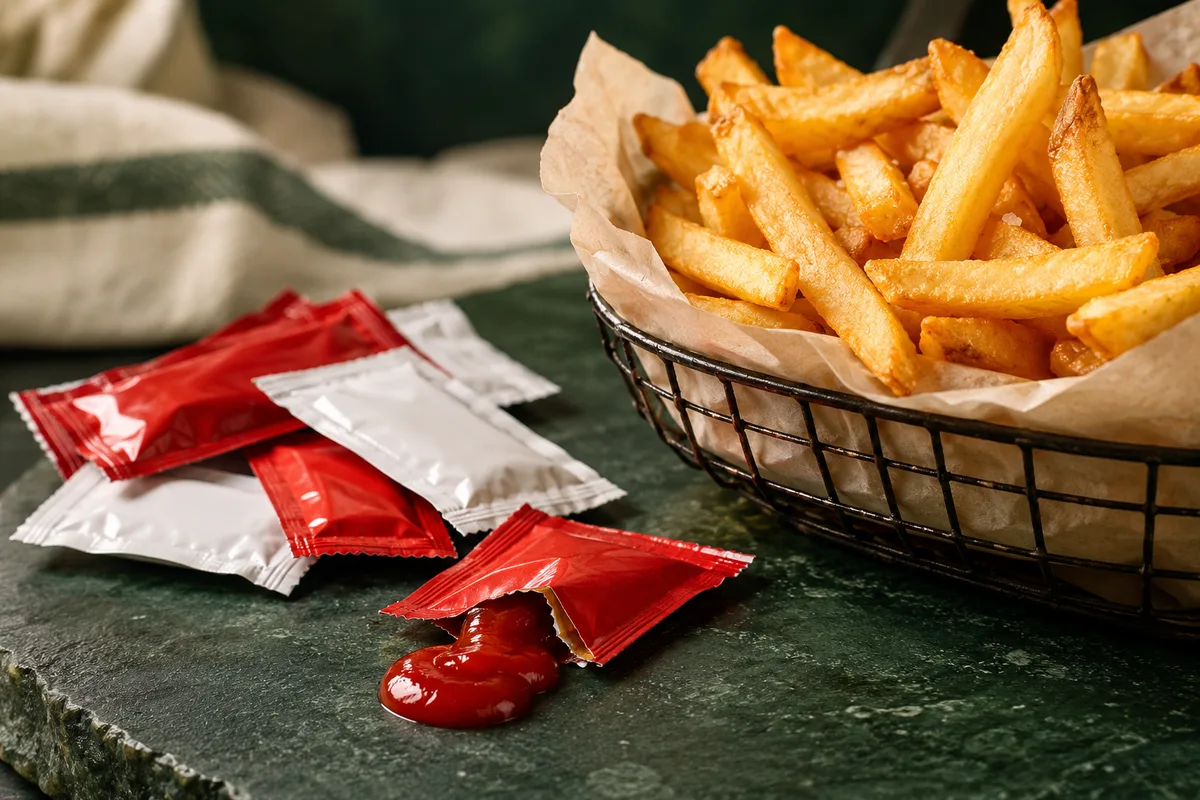
The 9 g sachet comes in packets of 100, and ten packets make a carton. That is 1,000 sachets, or about 9 kg of ketchup, in one carton.
How many portions does each give?
The numbers help you compare. One 4 kg pouch holds 4,000 g. A 9 g sachet is a typical single portion, so one pouch holds about 444 sachet-sized portions (4,000 divided by 9). A full 16 kg carton of pouches holds about 1,777 of them.
A sachet carton gives you 1,000 portions. If you serve more than 1,000 portions of ketchup a month, a pouch will usually cover more portions per carton.
Work out cost per serving
Take the price you are quoted and divide it by the number of portions.
Here is an example with made-up numbers, not Orino prices. Say a 4 kg pouch costs Rs 1,600. That is Rs 400 per kg, so a 9 g portion costs Rs 3.60. If a carton of 1,000 sachets costs Rs 5,500, each sachet costs Rs 5.50.
| Pack | Example price | Portions | Cost per portion |
|---|---|---|---|
| 4 kg pouch | Rs 1,600 | about 444 | Rs 3.60 |
| Carton of 1,000 sachets | Rs 5,500 | 1,000 | Rs 5.50 |
In this example the pouch is cheaper per portion. The sachet costs more, but it gives you a sealed, clean portion for a delivery bag. Sometimes that is worth paying for. Your real quotes will give different numbers, so do the sum again with them.
Which pack suits which outlet
A dine-in restaurant, a canteen or a cafe fills bottles and bowls all day. A pouch is the better fit there, because staff control the portion and there is less packaging to throw away.
A delivery or takeaway shop puts a sauce in every bag. Sachets are easier to pack, they stay clean, and the customer sees a sealed portion. A cloud kitchen with no dining room will use mostly sachets.
Many outlets use both. They use pouches inside the kitchen and sachets for orders that leave the shop. A simple split is pouches for the dine-in table and the line, and sachets for every delivery and takeaway order.
How many sachets to order
Start from your orders, not from a guess.
- Count how many delivery and takeaway orders you send in a month.
- Decide how many ketchup sachets go in each order. Many kitchens set a rule by dish, for example one with a burger and two with fries.
- Multiply, then add a buffer for extra requests, such as 10 percent.
- Divide by 1,000 to see how many cartons you need.
Here is an example. If you send 1,500 orders a month with an average of 1.5 sachets each, you need 2,250 sachets. Add 10 percent and you need about 2,475. That is two and a half cartons, so you would order three, or two cartons plus single packets of 100.
Waste and portion control
A guest at a table might squeeze out far more than a 9 g sachet holds. If sachets run out, do not let staff hand out extra without a rule. Set a standard, track it for a week, and you will see how much ketchup your menu really uses.
For pouches, use a clean squeeze bottle or a pump and fill it from the spout. Do not pour back leftover sauce from tables into the pouch. Keep the spout clean and closed between uses.
Packing for delivery
Sachets can burst if they are packed loose with heavy food. Put them in a small paper bag or tuck them in the lid of a container. Keep them away from hot items, because heat softens the pack. Check that the sachet is sealed before it goes in the bag.
Storage and handling
Store cartons on a dry, clean shelf away from direct sun and heat. Keep them off the floor. Open pouches should be used according to the instructions on the pack and your own food safety rules. Write the date you opened a pouch on a label, and use the oldest stock first.
How to ask for a quote
Tell the sales team which pack you want, how much you use and where to deliver. If you are not sure whether to choose a pouch, sachets or both, send your monthly order count and they can suggest a mix. You can send an enquiry, look at both formats on the products page or read the restaurant supply page. Our guide to sauces for food delivery covers packing in more detail.
Frequently asked questions
How many 9 g sachets equal one 4 kg pouch?
About 444. Divide 4,000 g by 9 g. In practice the number is a little different because each sachet is 9 g plus or minus 1 g.
How many sachets come in one Orino carton?
A carton holds 10 packets of 100 sachets, so 1,000 sachets in total. At 9 g each, that is about 9 kg of ketchup.
Should a restaurant use sachets or a pouch?
Use a pouch for dine-in and the kitchen, where staff refill bottles or bowls. Use sachets for delivery and takeaway, where every bag needs a sealed portion.
How many ketchup sachets should go in a delivery order?
Set a standard per dish, for example two sachets with fries and one with a burger, and track your use for a week. Adjust from there.
Where can I see Orino ketchup prices?
The site does not list prices. Ask the sales team for a quote with your monthly quantity and city.